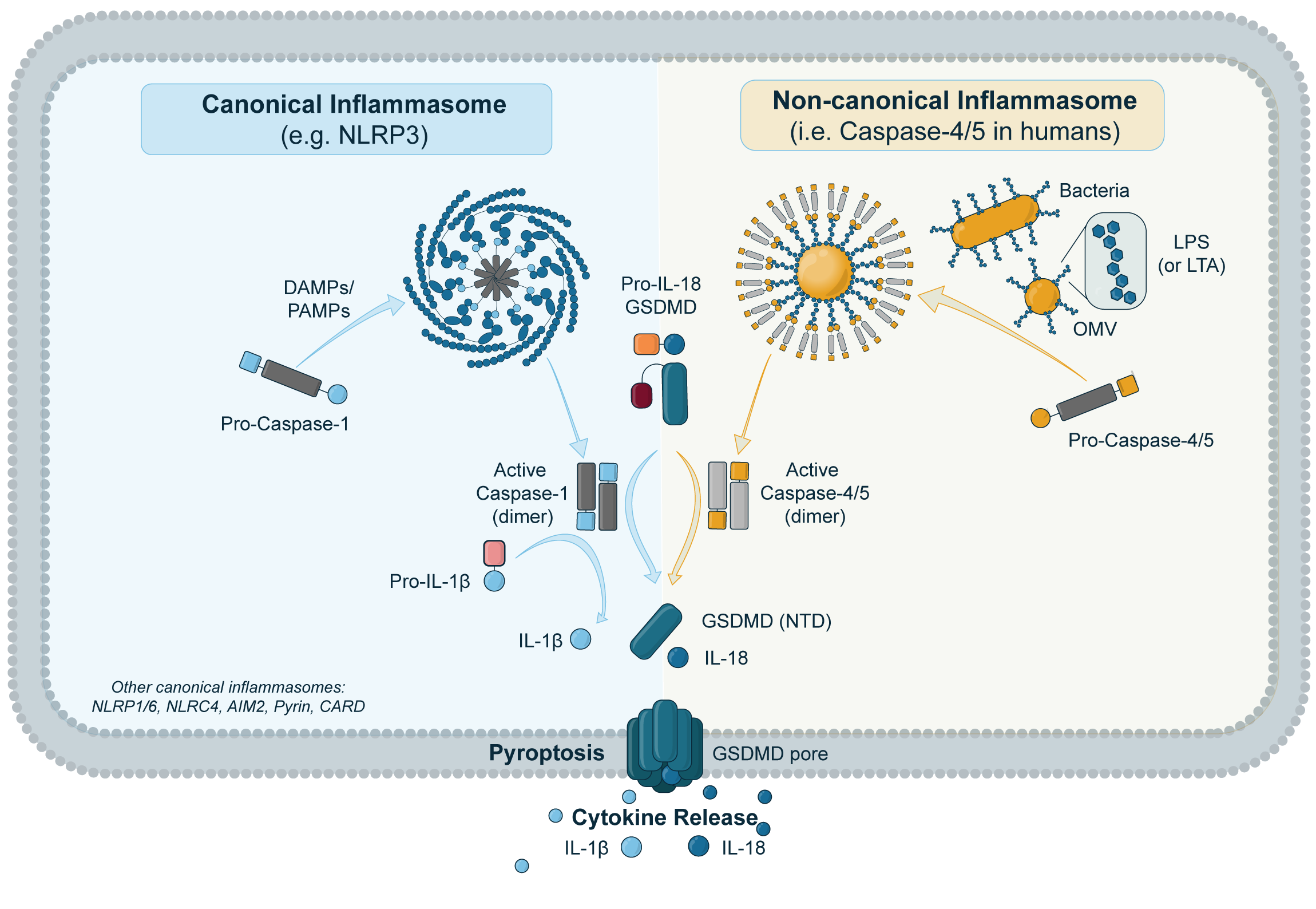
Caspase-4 and caspase-5 are proteins in the innate immune system that constitute the non-canonical inflammasome. Caspase-4/5 are drivers of autoimmune diseases characterized by bacteria-mediated barrier disruption and inflammation – such as inflammatory bowel disease (IBD), hidradenitis suppurativa (HS), severe asthma, and chronic obstructive pulmonary disease (COPD).
Pipeline
Advancing drug candidates with the goal of delivering transformative medicines for patients
VENT-04 is a highly potent, oral, small-molecule, allosteric inhibitor of caspase-4 and -5. Enabled by our proprietary ReSOLVE® platform and expertise in structural biology, VENT-04 is the lead caspase-4/5 inhibitor in development, having recently been nominated as a development candidate.
VENT-04: A first-in-class, oral, small-molecule inhibitor of caspase-4/5
Caspases have been notoriously difficult therapeutic targets for the biopharmaceutical industry. Inhibiting the active site presents major challenges, and allosteric caspase inhibition has been a long sought, but elusive alternate approach. Previously developed caspase inhibitors demonstrated efficacy in clinical trials, validating the therapeutic role of caspase inhibition. However, due to their non-allosteric mechanism, they required high doses that led to toxicity and program discontinuations. Using our expertise in structural biology and our ReSOLVE® platform, we discovered selective, highly potent, non-covalent inhibitors of caspase-4 and -5, leading us to design VENT-04, which acts through a unique allosteric mechanism of inhibition.
Caspase-4/5 Biology
Caspase-4 acts as an upstream innate immunity node, being expressed in epithelial and endothelial cells as well as immune cells such as macrophages. When activated, it leads to the secretion of the key immune mediator, IL-18, and an inflammatory cell death response known as pyroptosis. In myeloid cells, it also leads to IL-1β activation. Caspase-5 has similar functions, but its expression is generally found in epithelial cells of the gastro-intestinal tract.
Role of caspase-4/5 inhibition with VENT-04 in inflammatory bowel disease (IBD)
Current therapies for ulcerative colitis and Crohn’s disease act on immune activation far downstream from the initial drivers of disease. One major driver is the disruption of the intestinal barrier leading to activation of the non-canonical inflammasome in epithelial cells, which permits and is amplified by bacterial dysbiosis. The result is a downstream inflammatory cascade in specialized immune cells on which current approved therapies exert their effect.
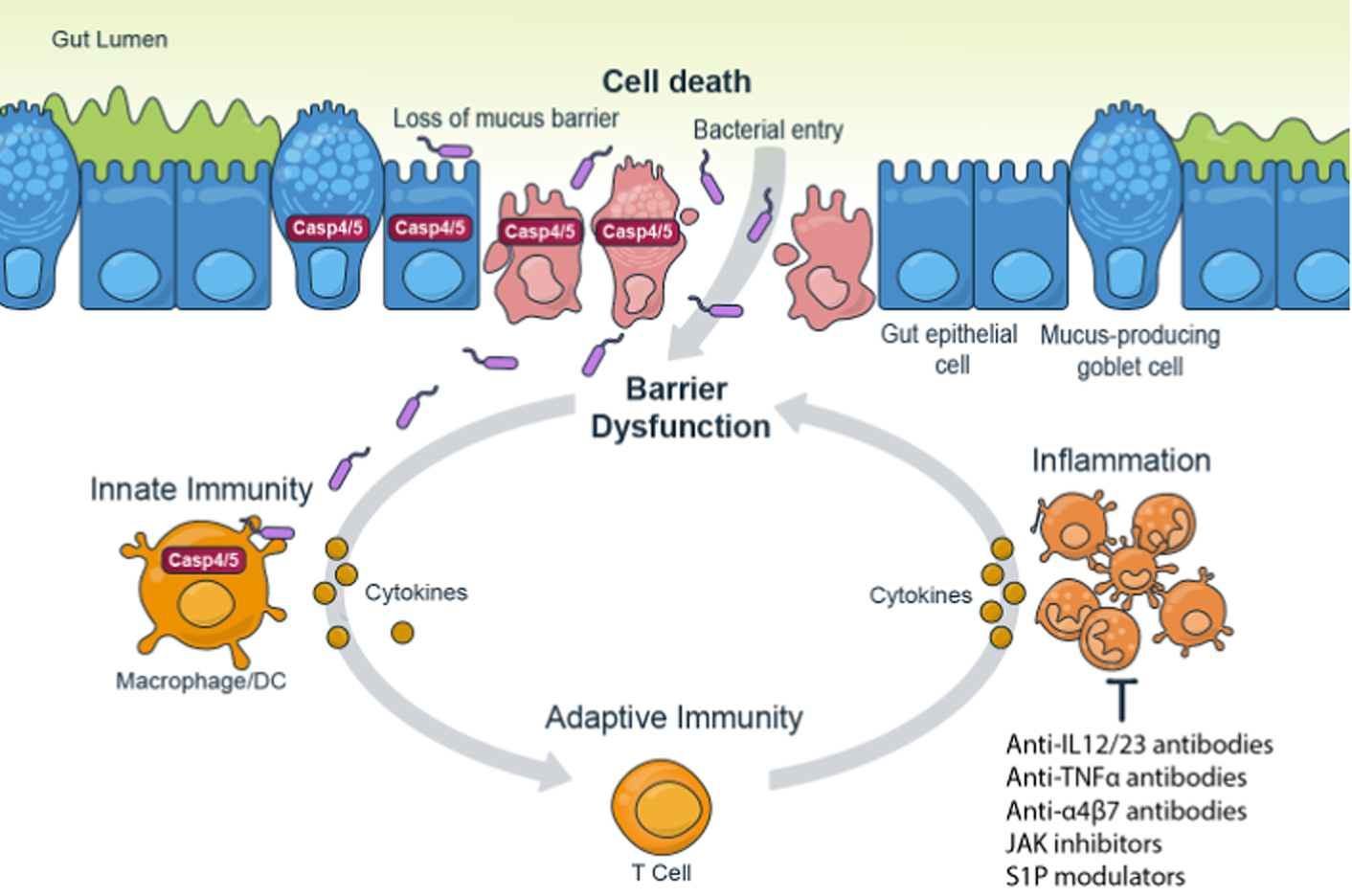
Patients with IBD, and in particular those who do not respond to current treatments, show signs of persistent barrier dysfunction and inflammasome activation. Multiple lines of evidence connect this specifically to activation of caspase-4/5, the non-canonical inflammasome.
In preclinical models, VENT-04 showed the ability to block IL-18 and completely protect mice from gut barrier disruption, in addition to robustly inhibiting the downstream inflammatory cascade, including clinically validated effectors of disease such as TNF-α, Lipocalin-2 (LCN2) and Oncostatin M (OSM).
Ventus recently published a review in Nature Reviews Immunology on the biology of this target
New insights into the noncanonical inflammasome point to caspase-4 as a druggable target.
Elkayam E, Gervais FG, Wu H, Crackower MA, Lieberman J. Nat Rev Immunol. 2025 Aug;25(8):558-568.